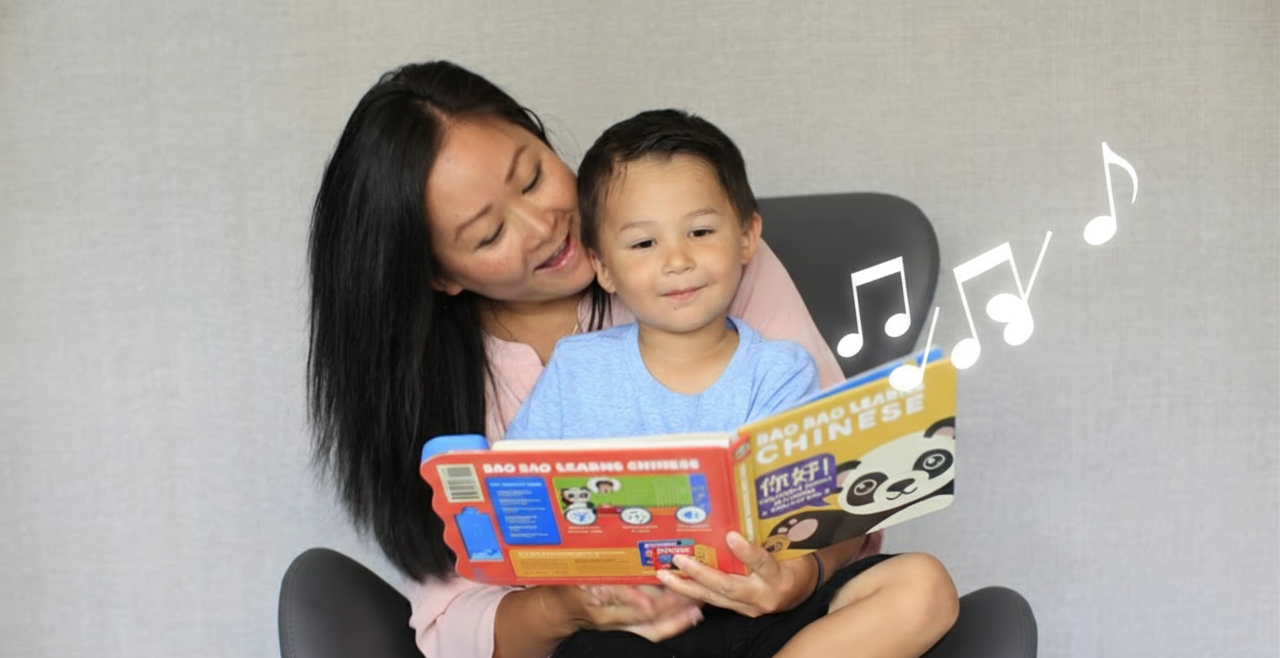
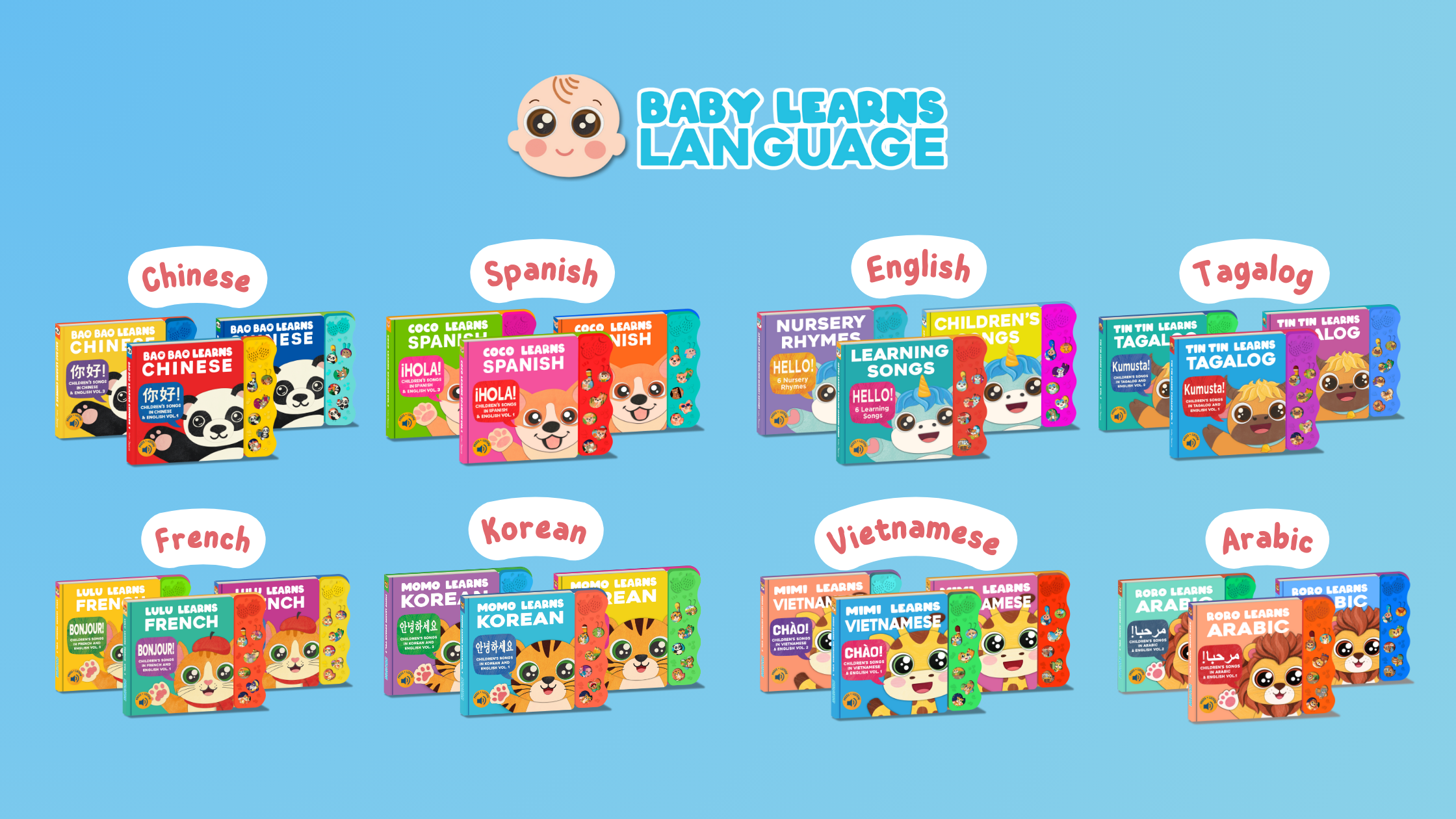
Children learn best when they’re engaged with all their senses. Think about the way toddlers explore the world, they touch, taste, listen, watch, and repeat. When it comes to learning a new language like Mandarin, that same principle applies. That’s why Bao Bao Learns Chinese books are so effective: they turn language learning into an experience rather than a task.
What Makes a Book Interactive?
Interactive books go beyond words on a page. They often include sound buttons, music, or textures that invite children to participate. In the case of Chinese sound books, a child can press a button and hear authentic Mandarin tones. This gives them the opportunity to connect what they see on the page with what they hear, reinforcing both vocabulary and pronunciation.
For babies, pressing a button is an exciting discovery. For toddlers, it becomes a playful game. And for preschoolers, it’s a chance to practice singing along or repeating words in Mandarin. At every stage, interaction helps deepen learning.
Why Sound Matters in Mandarin Learning
Mandarin is a tonal language, which means sound is central to its meaning. A single word can have multiple definitions depending on how it’s pronounced. By giving children the chance to hear and repeat tones in a book, you’re giving them the foundation to distinguish those subtle differences.
This is something that even the most dedicated parents may struggle to model on their own, especially if they don’t speak Mandarin. That’s why Chinese sound books and bilingual Chinese-English books for kids are so valuable, they provide the correct tones and rhythms every single time.
Learning Through Play
When kids interact with a book, they don’t feel like they’re “studying.” They’re playing. And that’s exactly how young children learn best. A toddler pressing the same button 20 times in a row isn’t just having fun, they’re practicing repetition, which cements memory and improves recall.
Pairing that with illustrations makes the learning even stronger. Seeing a picture of a tiger while hearing the Mandarin word “lǎohǔ” connects the sound to the image. This multisensory approach is what makes interactive Chinese books such a powerful tool in early language learning.
A Parent’s Role
Even if you don’t speak Mandarin yourself, interactive features make it easier to be part of your child’s learning journey. You can read the English text while your child presses buttons to hear the Mandarin version. Together, you create a shared experience where both parent and child are learning side by side.
The Long-Term Impact
The best part about interactive learning is that it doesn’t just teach vocabulary, it sparks curiosity. A child who loves playing with a Chinese sound book today may be the same child who asks to read longer Chinese story books for kids tomorrow. Interaction builds engagement, and engagement builds a love of learning.